
 Medan Tour
Sahabatholidays.com – When you think of North Sumatra, you probably picture sipping warm coffee while enjoying the view from Samosir Island. But did you know that the real adventure actually hides beneath the surface?
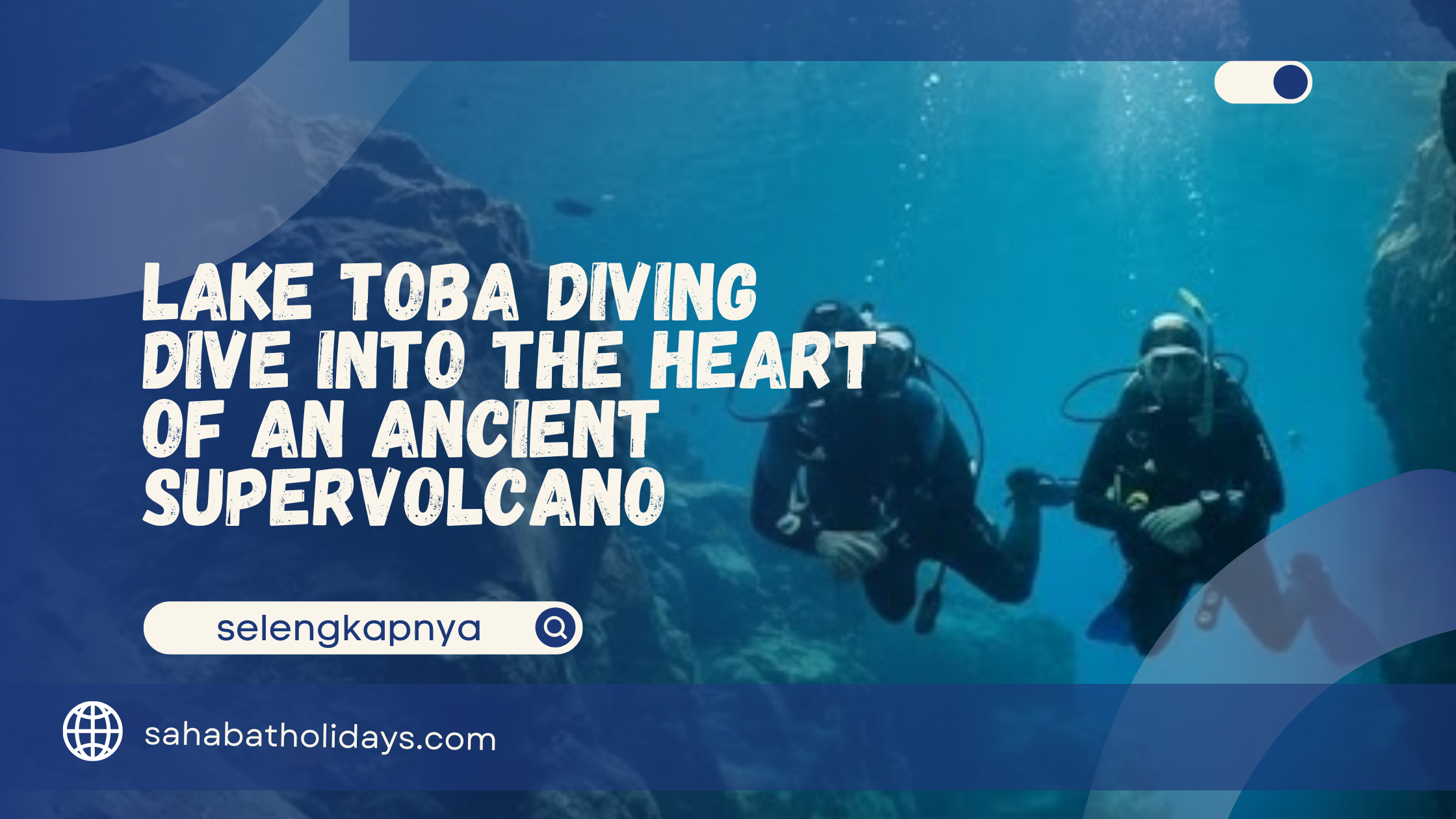
Lake Toba diving is an experience that few travelers know about, yet it offers a sensation you won’t find in any ocean. Unlike the busy coral reefs of Bali or Bunaken, diving here means descending into the crater of a massive supervolcano. It is quiet, mysterious, and undeniably epic.
Forget about colorful saltwater fish for a moment. This is about freshwater exploration at high altitude. Imagine floating past massive underwater boulders, submerged trees that look like a ghost forest, and the sheer walls of the caldera itself.
If you are looking for a unique story to add to your dive log, this is it. Ready to swap your hiking boots for fins and explore the depths of Lake Toba?
Why Dive Here?
Let’s be honest: if you are looking for colorful coral reefs or hoping to find Nemo, Lake Toba isn’t the place. But if you are chasing a story that no other dive site in the world can offer, you have found it.
Diving here means submerging yourself into the crater of a massive supervolcano the very same one that changed the earth’s climate thousands of years ago. It is an experience that feels ancient, quiet, and surreal. Instead of chasing schools of fish, you are exploring massive underwater cliffs, submerged valleys, and dramatic rock formations that tell a geological story.
For divers who love unique topography and want to say, “I dove inside a volcano,” this is an absolute bucket-list adventure.
Also Read: Lake Toba Day Trip – Express Guide 2026
What Makes Lake Toba Diving Different?
Most divers are used to the salty breeze and colorful coral reefs of the ocean, but diving in Lake Toba is a completely different beast. It changes the way you prep, the way you control your buoyancy, and even how you feel the moment you resurface. Here is why slipping beneath the surface of this volcanic lake is a unique experience that belongs in your logbook.
1. The Salt-Free Advantage
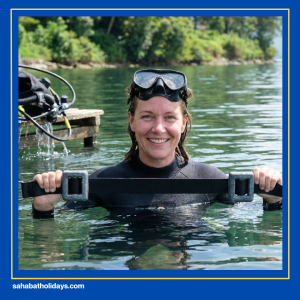
One of the immediate joys of freshwater diving is the comfort. Unlike the ocean, the water in Lake Toba won’t sting your eyes or leave your skin feeling sticky and itchy after the dive. You will notice the difference in your gear setup too; freshwater is less dense than saltwater, meaning you will need significantly less weight on your belt to descend. It feels cleaner, lighter, and surprisingly refreshing, allowing you to focus entirely on the exploration without the usual “salty” distractions.
2. A High-Altitude Adventure

This isn’t just a lake; it is a massive caldera sitting over 900 meters above sea level. This classifies Lake Toba as an altitude diving site, a special category that adds a layer of technical excitement for certified divers. Because of the reduced atmospheric pressure at this height, dive computers and tables need to be adjusted slightly differently than at sea level. It’s a cool technical nuance that makes the dive feel like a true expedition rather than just a casual swim.
3. Volcanic Topography Over Coral Reefs
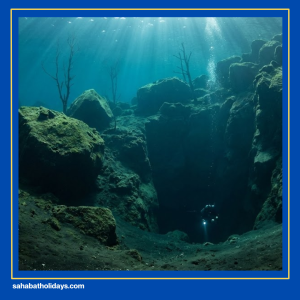
If you are expecting vibrant clownfish and endless coral gardens, think again Lake Toba offers something far more dramatic. The underwater landscape is defined by its volcanic history: massive boulders, steep drop-offs, and submerged trees that create a mystical, almost ghostly atmosphere.
The visibility varies, often creating beautiful light rays that pierce through the deep blue-green water, highlighting the sheer scale of the crater walls. It is less about spotting marine life and more about feeling the silence and grandeur of the earth’s geology.
Best Spots & Logistics: Planning Your Dive
Getting underwater in Lake Toba isn’t as simple as walking into a dive shop in Bali. Most accessible spots are near Parapat or Samosir Island, but here is the catch: operators and gear rentals are surprisingly scarce. You can’t just show up hoping to find tanks on the spot.
The Easy Way with Sahabat Holidays Don’t let the logistics stress you out. We handle the hard part so you can focus on the adventure.
-
Full Equipment – We provide tanks, weights, and wetsuits suitable for the lake.
-
Local Experts – Guided by certified dive masters who know the underwater terrain.
-
Private Boat – Direct transport to the best dive sites without the hassle.
-
Zero Stress – Just book your slot, show up at the meeting point, and dive.
Essential Tips Before You Dive
Diving in a volcanic lake at 900 meters above sea level comes with its own unique set of conditions. To ensure your dive is safe and comfortable, keep this quick checklist in mind before you pack your gear.
-
Thermal Protection – Don’t let the tropical weather fool you—the water gets chilly at depth. Temperatures usually hover between 20°C and 24°C. We strongly recommend a 3mm or 5mm wetsuit to keep you warm, especially during longer dives.
-
Certification Level – Because this is technically an altitude dive, the physics of decompression change slightly. While beginners can try it with strict supervision, the experience is best suited for divers who already hold an Open Water or Advanced certification.
-
Timing is Everything – For the clearest views of the underwater geology, plan your trip during the dry season (May to September). heavy rains can cause runoff from the crater walls, which temporarily reduces visibility.
Ready for a Volcanic Adventure?
Diving in Lake Toba offers a serenity you simply cannot find in the ocean. It is about the stillness of the freshwater, the dramatic underwater cliffs, and the thrill of exploring a site that changed global history. This isn’t just a dive; it is a journey into the heart of a supervolcano.
Don’t let the logistics of finding tanks or boats keep this off your bucket list. Sahabat Holidays is here to handle all the heavy lifting from gear rental to private boat charters—so you can just show up and dive.
Turn this unique experience into reality.

